by Raffaella Milandri©
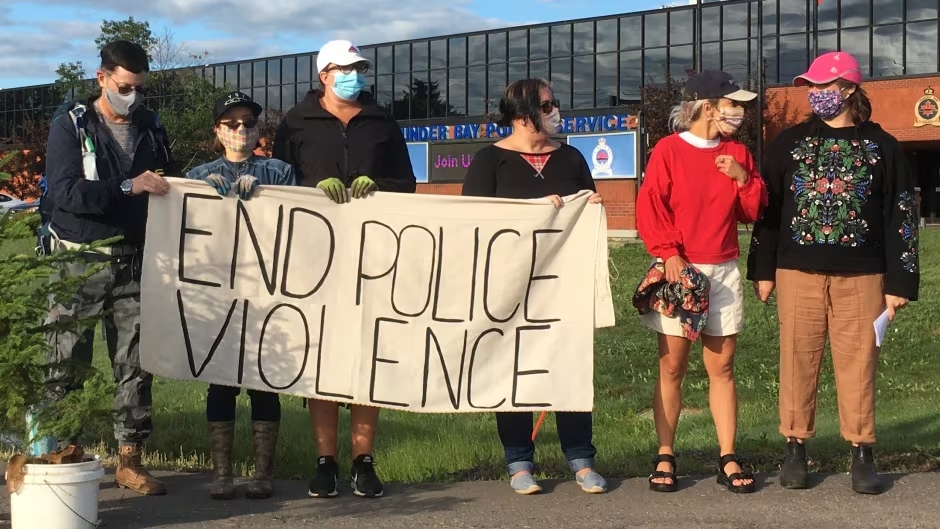
I had already decided to talk about Canada and the terrible deaths in Saskatoon, a series of cases that have been kept under wraps, when a Global News headline jumped out at me on 26 September: ‘Nine natives have died in police custody since August’. Let us elaborate. Serious accusations are already hanging over Canada, as we have seen in my articles ‘What’s behind Pope Francis’ apology to the Natives’, on Indian residential schools in Canada, and “Secret medical experiments on Natives in Canada: a lawsuit to prove that it still happens today”.
The case of Jon Wells – killed on 17 September 2024
The latest case, also reported by the CBC, was that of Jon Wells in Calgary, Alberta. Jon Wells, 42, a Blood Tribe member and well-known indigenous rodeo champion, died on 17 September 2024 following an ‘encounter’ with police officers in Calgary. Police said they were called to the hotel shortly before 1am after it was reported ‘a man causing a disturbance and refusing to leave’. The man was unarmed and, as the police reported, was behaving ‘in a confused manner’. When an officer pointed his stun gun at him, the man raised his hands and said: ‘I don’t want to die’. After an officer attempted to grab the man, a physical altercation ensued, the man was tasered and punched in the head, and handcuffs and leg restraints were applied. When other officers arrived, the man was lying on the ground, bleeding from the mouth and had vomited. A sputum mask was applied to the man and he was given a sedative. About three minutes later, someone noticed that he was unresponsive and shortly afterwards he was pronounced dead.
On 27 September, Blood Tribe Chief Roy Fox said the tribe’s council will file a complaint against the officers and request a thorough review by the Alberta Serious Incident Response Team (ASIRT). In a statement, Fox also said Wells’ death is reminiscent of events the First Nation experienced in the 1980s, when there was a public enquiry “Policing in relation to the Blood Tribe”. ‘We must seek justice for Mr Wells and ensure that such tragedies do not continue,’ Fox said. Assembly of First Nations chief Cindy Woodhouse said Wells’ death is just the latest in a string of indigenous deaths in Canada as a result of “confrontations with police”, including eight besides Wells in the last month alone. ‘There have been too many deaths,’ he said. ‘It’s heartbreaking and almost leaves you speechless.’ And we are speechless too.
Said Michael Redhead Champagne, a First Nations rights activist: ‘Who do we Natives call when we need help? Because we certainly can’t call the police or the RCMP (Royal Canadian Mounted Police)’.
Deaths in numbers in previous years
Despite representing only 5% of the Canadian population, 30% of the country’s prisoners are indigenous. In the provinces of Manitoba, Saskatchewan and Alberta – regions where the indigenous population is larger – this number rises to 54%. According to a 2017 CTV News analysis, an indigenous person in Canada is more than 10 times more likely to be shot and killed by a police officer than a white person. Between 2017 and 2020, 25 indigenous people were killed by the RCMP, Canada’s federal and national police service.
Chantel Moore, 26 – killed on 4 June 2020
In the early morning hours of 4 June 2020, police in the town of Edmundston, New Brunswick, reportedly responded to a call from Chantel Moore’s fiancé who, concerned, asked for a security check. Her boyfriend, who lived more than 1,000 km away in Toronto, allegedly believed that Chantel had been harassed. The 26-year-old from British Columbia, a member of the Tla-o-qui-aht First Nation, had recently moved to New Brunswick to be closer to her six-year-old daughter, who lived with Chantel’s mother. Minutes later, Chantel – whom her family described as ‘a good mum’, someone who ‘made friends wherever she went’ and ‘loved to make people laugh’ – was dead. According to the police, Chantel had come out of her flat onto a balcony with a knife and threatened the officer, who then shot her. After Chantel’s body was brought back to British Columbia, her maternal grandmother, Grace Frank, and her mother, Martha Martin, went to see it. ‘His face was bruised, his right eye was sunken. He had seven gunshot wounds on his body and his left leg was not attached below the kneecap,’ Grace tearfully recalled, adding that the police had provided no explanation for the body’s condition. The family wanted to prevent Chantel’s daughter Gracie – named after her great-grandmother – from learning how her mother died, but the six-year-old accidentally saw a report on TV. The great-grandmother says she was shocked and said: ‘I don’t want to be shot like this, I don’t want to die like this’’. Asked about the condition of Chantel’s body, Mychèle Poitras, communications director for the City of Edmundston, said: ‘No comment can be made. The Tla-o-qui-aht First Nation called for the officer to be charged with murder and for cameras to be mandatory for all police officers working in contact with the public. It also called for a full national enquiry into the causes of police brutality against indigenous people.
Saskatoon cases: Starlight tours
Neil Stonechild, 17 years old – killed in November 1990
In Saskatchewan a deadly phenomenon known as ‘starlighttours’ has been threatening indigenous people for decades. No one knows for sure where or when the term originated, but indigenous residents know exactly what it means: police pick up indigenous people – who are often said to be intoxicated – and abandon them at night on the outskirts of the city of Saskatoon, where temperatures regularly drop to -28°C during the winter. In November 1990, a 17-year-old Saulteaux First Nations boy was found frozen to death in a field on the outskirts of Saskatoon. Neil Stonechild was face down in the snow, wearing only one shoe and had cut marks on his face and arms. He was found by construction workers on 29 November, five days after he was last seen. An autopsy indicated that he had died of hypothermia. But his distraught family suspected foul play. The police investigation into his death was closed after only three days. Former Saskatoon police sergeant Keith Jarvis, who led the investigation, explained in his report: ‘It is believed that, unless hard evidence to the contrary is obtained, the deceased died of frostbite. At the time of his death, Neil was living between a group home – an accommodation that houses multiple children and young people in foster care – in West Saskatoon and his mother’s home. According to his older brother, Dean Lindgren, Neil was a ‘good kid’ who dabbled in ‘petty crime’ but was not involved in violent crime or gangs.
On the night Neil died, he was wearing his brother’s high school jacket. It was, Dean recalls, one of his most prized possessions.
The two brothers had a strong bond, even though they had only known each other for two and a half years when Neil died. Dean had, in fact, been taken from his family as part of the ‘1960s scoop’, a practice implemented by Canadian provincial and federal governments between the 1960s and 1980s in which indigenous children were taken from their families and adopted by white families in Canada and the United States. After finishing high school, Dean had travelled from his adoptive home in Minnesota to the United States to find his biological family in Saskatoon. He had bonded immediately with his brother and, the week before his death, the two brothers had planned to travel to the province of Ontario to pick up a car Dean had bought and return to Saskatoon together. But in the end Dean had gone alone. On the way back to Saskatoon, Dean had had an accident and wrecked his new car. Borrowing a stranger’s phone, he had called home and his cousin Andrea had told him: ‘Dean, your brother has been killed’. Dean remembers learning that Neil was with his 16-year-old friend Jason Roy the night he disappeared. But for 10 years Jason never spoke about what happened that night. He later explained that he had been traumatised and was afraid of potential repercussions if he spoke out.
On 19 January 2000, Lloyd Dustyhorn, a 53-year-old First Nations man, was found frozen to death in Saskatoon. The day before, he had been taken into police custody for public drunkenness. In May 2001, following an inquest, a jury decided that his death was caused by hypothermia. Later that month, Darryl Night, a Cree man from Saskatoon, told police that two officers had left him freezing cold several kilometres from Saskatoon. Darryl had gotten into a drunken argument with his uncle and said the officers picked him up outside his uncle’s flat before dawn on 28 January. He was wearing only a T-shirt and running shoes when they dropped him off in a remote rural area outside the city. He managed to walk several kilometres to a power station, where a watchman allowed him to hail a taxi. The next day, the shirtless body of Rodney Naistus, a 25-year-old indigenous man, was found near where Darryl said police officers had left him. A few days later, on 3 February 2000, the body of another indigenous man, Lawrence Kim Wegner, 30, who had last been seen three days earlier, was found wearing only a T-shirt, socks and jeans. According to police and public enquiries, both men appeared to have frozen to death, possibly within hours of being released from police custody. These cases prompted the Province of Saskatchewan to hold an enquiry into the alleged ‘starlight tours’ and also to re-examine Neil’s death in 1990. Jason Roy this time testified at the inquest, telling of the last time he had seen his friend alive, on that cold November night. He and Neil were walking on the west side of town after drinking at a local house. The two had become separated, and the next time Jason saw Neil he was in the back seat of a police cruiser, his face bloodied, screaming for help and telling Jason, ‘They’re going to kill me. The investigation established that Neil was in the custody of two police officers and that the wounds and marks on his body ‘were probably caused by the handcuffs’. The officers denied having been in contact with Neil on the night he died, but evidence contradicted their claims and the two were dismissed from duty in November 2004. Despite this, no Saskatoon police officer has been prosecuted for Neil’s death or that of any other native who died of frostbite
Initially, Saskatoon Police Service (SPS) investigators insisted that these were isolated incidents. However, in 2003, Police Chief Russell Sabo admitted that there was a ‘possibility’ that the police force had been dumping indigenous First Nations people outside the city for years, revealing that an SPS officer had been punished in 1976 for taking an indigenous woman to the outskirts of the city and abandoning her there. The ‘starlight tours’ would go on for decades. A veritable series of terrible serial murders.
On 21 April 2018, Ken Thomas alleged that he was picked up by two SPS officers and abandoned outside the city at night in the cold. This allegation was investigated by the Public Complaints Commission, which stated that it was unfounded. In a press release, Police Chief Troy Cooper stated that it was unlikely that there was any contact between the SPS and Thomas on the night of the incident, based on video and audio recordings from police cars (link: https: //saskatoon.ctvnews.ca/starlight-tour-allegation-unfounded-investigation-finds-1.4222925 ).
Attempts at censorship, films and music
Between 2012 and 2016, the ‘Starlight Tours’ section of the English Wikipedia article on the freezing deaths in Saskatoon was deleted several times. An investigation revealed that two of the edits came from an SPS computer
(https://www.cbc.ca/news/canada/saskatoon/saskatoon-police-starlight-tours-wikipedia-delete-1.3512586). Alyson Edwards, spokesperson for the police force, denied that the removal of the content was officially approved by the police force. On 31 March 2016, the Saskatoon StarPhoenix reported that ‘the Saskatoon Police Department has confirmed that someone within the police department has deleted references to “Starlight tours” from the police force’s Wikipedia webpage’. According to the report, a ‘police spokeswoman acknowledged that the section on Starlight Tours was deleted using a computer within the department, but said investigators have not been able to identify who did it. The spokeswoman said the SPS is working to ‘move forward with all the positive work that has been done, and continues to be done, that has come out of the Stonechild investigation’.
The ‘Starlight Tours’ incidents have been covered in two films. Darrell Night’s experiences were documented in the Canada Award-winning documentary Two Worlds Colliding (2004) by Tasha Hubbard, National Film Board of Canada. An incident was also portrayed in the half-hour drama film Out in the Cold, directed by Colleen Murphy and starring Gordon Tootoosis, Matthew Strongeagle and Erroll Kinistino.
In 2005, the Canadian punk rock band Propagandhi released the album Potemkin City Limits, which includes the song ‘The Bringer of Greater Things’, ‘dedicated to Rodney Naistus, Neil Stonechild and Lawrence Wegner, who were murdered by members of the Saskatoon Police Department’ (album liner notes).
The song ‘One Shoe’ by Canadian musician Kris Demeanor was written in reference to the freezing deaths in Saskatoon, particularly that of Stonechild. The song ‘Starlight’ by the Wailin’ Jennys was also inspired by the freezing deaths. In 2017, Mi’kmaq artist Cathy Elliott completed a five-week workshop with Sheridan College students for her musical Starlight Tour.
Conclusions
The reality is that very little has been done to get to the bottom of these terrible events: either the ongoing ones of August and September 2024, or the ‘sport’ of Saskatoon police, which, in essence, seems to be catching Native people wandering around the small town at night to abandon them in their shirts to freeze. Native Canadians, made up of First Nations, Inuit and Métis communities speak of genocide. And us? We reflect on the fact that being born Native in Canada is a real struggle for survival, as if the centuries of injustice already passed were not enough. Talking about these facts, sharing them and disseminating them is our right and our duty.
Published originally in Italian in The AntiDiplomatico, 1 October 2024
“Nativi” column by Raffaella Milandri
https://www.lantidiplomatico.it/news-nativi/53237/
Articles by Raffaella Milandri
- Revenge of the Native Americans? Killers of the Flower Moon and Lily Gladstone
- What lies behind Pope Francis’ apology to Native Americans, exploring the historical context and significance of his statement in relation to Indigenous rights and healing
- The truth about Indian reservations. The lands do not belong to the Native Americans
- Forgetting the Native American Genocide: over 55 million dead
- Forced sterilisation: the latest weapon against Native Americans
- Leonard Peltier: the appeal for the Native American activist after 47 years of maximum security imprisonment
- Sioux-Lakota ban Governor Kristi Noem from entering Indian reservations
- Indian reservations inspired Nazi concentration camps
- Nuclear tests and toxic waste on Indian reservations. The film ‘Oppenheimer’ doesn’t tell it right
- Secret medical experiments on Native people in Canada: a lawsuit to prove it still happens today
- The ‘Manifest Destiny’ of the United States, Native Americans and the Rest of the World
- How do Native Americans see the situation in Gaza: a parallel path?
- Native American voting discrimination in US elections
- The paradox of Puerto Rico: American citizens but without the right to vote
- Native Americans and firewater (and Tim Sheehy’s statements)
- Alarm over Canadian police violence towards Native people: nine dead in the last month alone
- Canada tried – and still insists – on erasing Native rights
- Biden apologises to Native Americans: the (negative) comments and the background
 Nativi Americani ieri e oggi
Lascia un commento