by Raffaella Milandri©
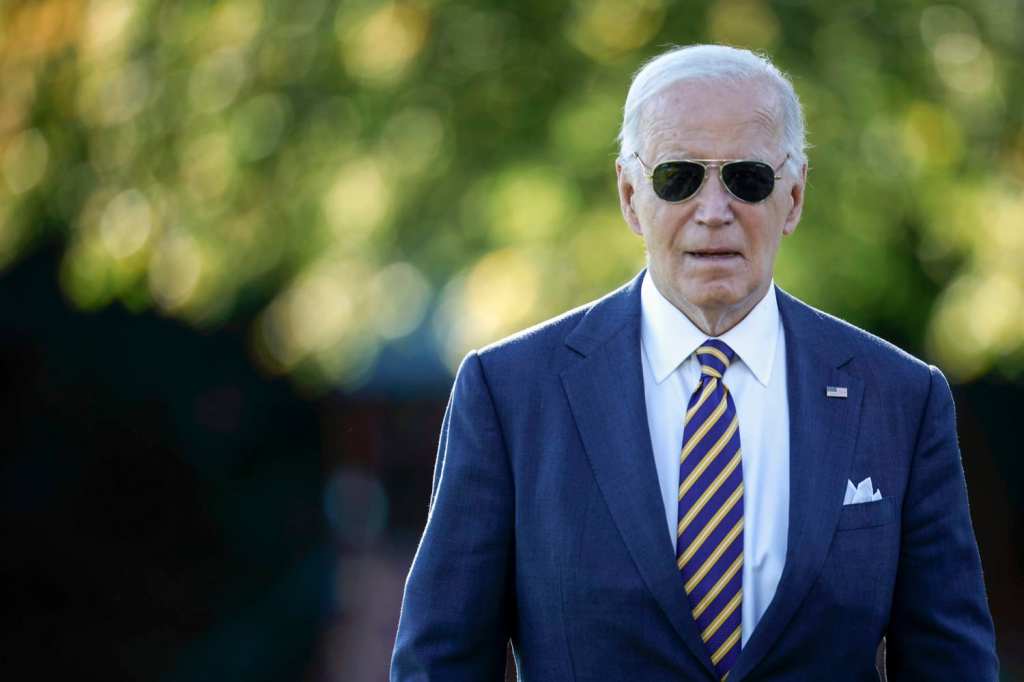
‘I never in a million years imagined that such a thing could happen,’ US Secretary of the Interior Deb Haaland, a member of the Pueblo tribe, told Time, moved. And if she says so, we can believe that the announcement of Biden’s apology on 25 October, posted on the White House website on 24 October, was the result of a ‘timely’ decision. The reasons? It is easy to imagine them. During his term in office, Biden has never visited an Indian reservation. Here he is, ten days before the election, not only visiting the Gila River Indian Community, a Pima and Maricopa reservation, but deciding to make an official apology for the coercive system of Indian residential schools, run by the US government for over 150 years.
The era of the apology
‘The offer of an apology has become so commonplace in world politics that some have called it ‘the age of apology’’ (Andrew Rigby, Justice and Reconciliation: After the Violence). Yes, because an apology is first and foremost a political choice and, when exercised on behalf of a government, it is taken for granted that the mere gesture of apology is followed by a public pardon. In essence, an act of force before even real repentance. What should, however, accompany the apology should, in such cases, be dutiful compensation, as Justin Trudeau has – partially – offered to First Nations in Canada for Indian residential schools.
The most recent and illustrious apology precedent, in fact, is in Canada: Pope Francis, in the summer of 2022, went on a penitential trip to Canada to apologise for the horrendous treatment of native youth in Church-run residential schools.
If, behind Biden’s apology, there are political motives, i.e. the pressing election that sees these days, in exit polls, a head-to-head between Harris and Trump, behind the Pope’s apology was the discovery of probable and countless mass graves in the grounds adjacent to the Church-run schools (see the article ‘What’s behind Pope Francis’ apology to Native Americans’). To put it briefly, in addition to the worldwide media wave of macabre and accusatory headlines, in this case we find the Canadian Conference of Catholic Bishops, CCCB, alarmed after a series of church ravings by enraged Native Canadians. As for reparations from the Church, the debate was lengthy and the little money came from a fund-raising drive (sic).
The history of apologies to Indigenous Peoples
The result of the bloody policies of assimilation and subjugation adopted by all colonial powers, the Indian residential schools are but one example of the systems deployed against indigenous peoples around the world. These schools, as mentioned in other articles, were aimed at nullifying the traditional culture of the young natives, forbidding them to speak their language and practise their religion, cutting their long hair – sacred to them, assigning them Christian names, forcibly removing them from their families of origin. These schools were the scene of unimaginable violence, often also becoming a kind of ‘buffet’ for paedophiles (for the full story see ‘India’s Residential Schools. Le tombe senza nome e le scuse di Papa Francesco’, Raffaella Milandri, Mauna Kea Edizioni).
On 11 June 2008, on behalf of the Canadian government and all Canadians, Prime Minister Stephen Harper appeared before the House to apologise and to ask forgiveness from the indigenous peoples of Canada for the Indian residential school system. The apology emphasised a willingness to learn from those tragic events to ensure they never happen again.
On 13 February 2008, Australian Prime Minister Kevin Rudd had preceded him by issuing a formal apology to Aboriginal peoples, particularly the Stolen Generations, whose lives were ruined by past government policies of assimilation and forced removal of children.
Both the apologies – Australian and Canadian – are noteworthy for several reasons: they were issued by heads of government and were spoken on the record within the space of government, the national parliaments of both countries. It should be noted that Biden was very careful not to make his apology in a seat of government. Both apologies were surrounded by celebration and controversy, and tracing the consequences is a difficult task. Apologies, in general, have multiple functions: they tell stories of wrongdoing, express dissent from such wrongs, and engage in appropriate forms of reparation, redress or change.
But it is the moral, rather than political, efficacy of apologies that must go beyond a mere state exercise of ‘performative guilt’. As I mentioned earlier, a forgiveness process often perpetuates the power imbalances that led to the violence in the first place, especially when the process is managed by the state: ‘The powerful state not only decides whether and when an apology will be made (or whether a “quasi-apology” will be given), but also how it will be executed. This is especially true when the state pursues a policy of affirmative rather than transformative reparation. A semblance of justice is thus removed from the reconciliation process.
The past of the US apology to Native Americans
In 1993, the US Congress devoted an entire resolution to apologising to Native Hawaiians for overthrowing their kingdom in 1893. But the US ‘apology’ to the Natives as a whole was delayed until 2009, ‘hidden’, however, in an unrelated budget bill. In 2009, Senator Samuel Dale Brownback, in fact, sponsored a joint resolution in the Senate to acknowledge and apologise for the United States’ long history of mistreatment of Native Americans. But the text of the resolution was only added as an amendment to the Department of Defence Appropriations Act of 2010. In it, Congress ‘apologises on behalf of the people of the United States to all Native peoples for the numerous instances of violence, mistreatment, and neglect inflicted on Native peoples by citizens of the United States’. The text encouraged the president – then Obama – to acknowledge the wrongs committed by the United States against native nations. It did not, however, in any way admit responsibility in any of the ongoing lawsuits against the US government by native peoples.
Analysis of Biden’s apology and reactions
As already mentioned, Biden’s apology is instrumental to the election. According to NCLS data, over 4.7 million Native Americans are eligible to vote, although only 66% of them are registered to vote. A good haul of votes where the game is not done. Harris, despite the great support of the media and many personalities from the world of politics and show business, in the exit polls these days seems to be on a par with Trump, although publicly opposed by many. If we go by ‘weighting’, Harris has five native-born congressional candidates in his group, and Trump four (see Indian Country Today). On Harris weighs the shadow of the Palestinian victims, the war in Ukraine and four years as a virtually invisible vice-president. Now, she presents herself as a female offshoot of Biden (and Obama, always at the helm of Dem power). How will it end? We await the results. But will Biden have won the hearts of Native voters?
Back to the apology. I read the text of Biden’s apology, which actually says very little. The gist is: ‘I formally apologise as President of the United States of America, for what we did. I formally apologise. And it is long overdue.’ He then refers to several initiatives taken by his administration in favour of tribal communities, among which he mentions an allocation of over a trillion dollars (one trillion) for infrastructure on reservations, in Indian Country. This should be, since he does not make precise references, the Bipartisan Infrastructure Law (BIL), issued in November 2021, of which, however, only 13 billion would go directly to tribal governments. I reserve the right to elaborate. However, the apology on Friday 25 October was not accompanied by proposals for reparations to the victims and survivors of India’s residential schools.
The issue is a different one. Raise your hand if you believe that Biden’s apology did not serve Native votes for Harris.
Speaking of Indian residential schools, Biden raised a deep and complex emotional hurricane. He used a terrible trauma, one that shocked several generations of Native Americans, including some still living, for a political purpose. The emotional wave was very strong.
What were the reactions? The first impact of the apology was enormous. A people accustomed to being ignored by the media and mistreated by the government for centuries, found themselves for the first time with a Biden visiting an Indian reservation and even offering an apology. With his words, he made Native Americans relive terrible experiences and conjured up ghosts that had been silenced in every way for dozens of years. I have read many Native newspaper articles, and I have read many comments on social media. The newspapers mostly release enthusiastic articles full of gratitude for this apology. But native readers’ comments are something else. ‘Hypocrite’ is the word that recurs most frequently. ‘I won’t vote Dem,’ someone adds. Jack K. writes: ‘Dems are desperate to find votes, excuses are worthless’; Christine B.: ‘We don’t just want words. We want back our land, our culture, our language, everything that was stolen from us’; Dave S.: ’Does this apology do any good? Let the government honour the treaties and free Leonard Peltier! It is disgusting only that you think this is honourable’; Kathleen E.: ’To hell with your excuses! They do not bring back children who have been abused and who have died’.
Meanwhile on Saturday, 26 October, Waltz visited the Navajo Nation: a real assault on the native votes.
We need to seriously consider whether this apology by Biden does not become a boomerang. Because the identity pride of Native Americans is the only force that has made them survive so many misdeeds. The only strength that has made them face the unimaginable.
Published originally in Italian in The AntiDiplomatico, 27 October 2024
“Native” column by Raffaella Milandri
https://www.lantidiplomatico.it/news-nativi/53237/
Articles by Raffaella Milandri
- Revenge of the Native Americans? Killers of the Flower Moon and Lily Gladstone
- What lies behind Pope Francis’ apology to Native Americans, exploring the historical context and significance of his statement in relation to Indigenous rights and healing
- The truth about Indian reservations. The lands do not belong to the Native Americans
- Forgetting the Native American Genocide: over 55 million dead
- Forced sterilisation: the latest weapon against Native Americans
- Leonard Peltier: the appeal for the Native American activist after 47 years of maximum security imprisonment
- Sioux-Lakota ban Governor Kristi Noem from entering Indian reservations
- Indian reservations inspired Nazi concentration camps
- Nuclear tests and toxic waste on Indian reservations. The film ‘Oppenheimer’ doesn’t tell it right
- Secret medical experiments on Native people in Canada: a lawsuit to prove it still happens today
- The ‘Manifest Destiny’ of the United States, Native Americans and the Rest of the World
- How do Native Americans see the situation in Gaza: a parallel path?
- Native American voting discrimination in US elections
- The paradox of Puerto Rico: American citizens but without the right to vote
- Native Americans and firewater (and Tim Sheehy’s statements)
- Alarm over Canadian police violence towards Native people: nine dead in the last month alone
- Canada tried – and still insists – on erasing Native rights
- Biden apologises to Native Americans: the (negative) comments and the background
 Nativi Americani ieri e oggi
Lascia un commento