by Raffaella Milandri©
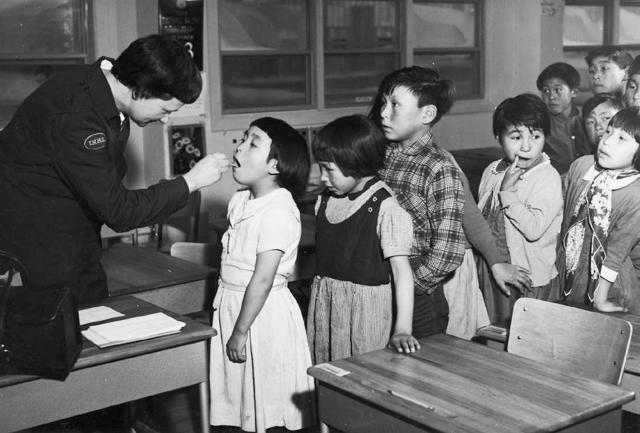
It must be made clear: I am working to ensure that what happened and is happening to the Native peoples of North America is publicised, not only for the sake of the peoples involved, but to prevent such abuses from affecting anyone, any community, when a ‘superior’ interest of governments or supranational bodies decides that human beings are ‘expendable’ in defiance of civil and international rights.
Is history repeating itself? A class-action lawsuit, certified in early February 2024 by the Supreme Court of Nova Scotia, Canada, revives the painful history of a government conducting medical experiments on indigenous peoples and the persistent discrimination they continue to face in the country’s health care system. But let us take a step back together.
Experiments on Canada’s indigenous population
Beginning in the late 19th century, students at various Canadian Indian residential schools were used as unwilling guinea pigs in a series of heinous experiments,[1] including feeding studies, according to the Truth and Reconciliation Commission of Canada. Students were given more or less milk, some were given vitamin C tablets (and some were not), some were given vitamin-enriched flour and some were not. The intent was to determine whether these dietary interventions reduced the incidence of various diseases. But the students subjected to the experiments were never given the opportunity to share the benefits and, in some cases, the children were denied access to dental care or iron supplements. Moreover, they were used as research subjects without their consent or that of their parents. Such experiments on nutrition in particular were conducted by the Department of Pensions and National Health (now Health Canada) in the 1940s and 1950s. The experiments were conducted on at least 1,300 indigenous people across Canada, about 1,000 of whom were children. The many deaths related to the experiments have been described as part of the Canadian genocide of indigenous peoples.
Food experiments
The experiments involved isolated indigenous communities and Indian residential schools and were designed to detect the relative importance and optimal levels of newly discovered vitamins and nutritional supplements at the time. They included deliberate and prolonged malnutrition and, in some cases, denial of dental services. The Government of Canada was aware of the malnutrition in its residential schools and granted approval to conduct nutrition experiments on children[2]. The nutrition experiments conducted on indigenous children in residential schools came to light in 2013 through the research of nutrition historian Dr. Ian Mosby[3]. The aim initially was to investigate the feeding patterns and nutritional states of Indigenous people in selected communities by administering physical tests, blood tests and X-rays. Severe malnutrition was noted, among others in the northern Cree communities, where there was a high infant mortality rate (eight times the national rate). Recent research into the feeding history indicated that the malnutrition of children in residential schools was intentional, as evidenced by the Canadian government’s awareness of malnutrition in residential school children before the experiments began[4]. Other experiments with indigenous children included the deliberate reduction of milk rations to less than half the recommended amount for two years, the provision of vitamin, iodine and iron supplements to some children but not to others, the induced drop in vitamin B1 levels, and one school provided no supplements to any students in order to establish a baseline against the results from other schools[5]. In 1947-48, the James Bay Survey was conducted, which expanded on the earlier study by employing anthropologists, physicians, a dentist, a medical photographer and an X-ray technician. In 1948, in a press release promoting the study conducted in indigenous communities and Indian residential schools, the Canadian Bureau of Indian Affairs stated: ‘The natives have abandoned the native food habits of their ancestors and have adopted a diet that lacks essential food values, leads them to malnutrition and leaves them prey to tuberculosis and other diseases. The white man, who unwittingly is responsible for the change in the Indians‘ eating habits, is now trying to save the red man by directing him to proper food channels…’[6]. Recounts one survivor, Ray Silver, a former student at Alberni Residential School in British Columbia, to the Truth and Reconciliation Commission of Canada: ‘We children, sneaking from school, had to walk about a mile, sneak across the bridge and go to a dump and pick up half-rotten apples, which were no longer good to sell, but we children who were starving, we would go there and pick that stuff up, fill our shirts and run back across the bridge and back to the school.’[7]
The 2018 class action lawsuit
A class action lawsuit was filed against the Canadian government on behalf of a group of indigenous people who claim they were subjected to medical experiments in Indian residential schools and sanatoria without their consent. ‘Inappropriate medical procedures and experiments were conducted by the Government of Canada, or its representatives, from the 1930s through the 1970s,’ reads the lawsuit, filed in May 2018 in a Saskatchewan court. Tony Merchant, a lawyer with the Merchant Law group, said, ‘Indigenous Canadians were subjected to forced and unethical medical tests and deserve compensation for this cruel treatment.’ He added that different surgeries were performed on them than the way non-indigenous Canadians were treated. The lawsuit seeks financial compensation for the affected indigenous people. It must be said that this is not the first class action lawsuit about Canada’s treatment of indigenous peoples in relation to medical care (and residential schools and their victims). In January 2018, an Edmonton woman filed a lawsuit against Canada alleging abuses at the 29 ‘Indian Hospitals’ for Indigenous people operated by the federal government from 1945 until the last one closed in 1981. His statement of claim alleges that Indigenous patients were physically and sexually assaulted, deprived of food and drink, force-fed their own vomit and forcibly restrained in their beds.[8]
2024: The Pictou Landing First Nation accuses two radiologists of secret medical experiments
For this lawsuit, which revives Canada’s painful history of conducting medical experiments on indigenous peoples, it must be said that it has not yet reached court and the leader of the Pictou Landing First Nation of the Mi’kmaq tribe is still gathering evidence and testimony in order to proceed and enter the debate. Members of this First Nation claim in the lawsuit that the radiologists subjected them to a secret study without their knowledge or consent and that it made them feel ‘violated and humiliated’. In a statement of claim, filed in the Supreme Court of Nova Scotia in June 2020 and certified as a class action on 7 February 2024, Chief Andrea Paul, the lead plaintiff, states that she and 60 other members of the Pictou Landing First Nation participated in an MRI in March 2017 at the QEII Health Sciences Centre in Halifax for a medical research project administered by the Canadian Alliance for Healthy Hearts and Minds. But after the test was over, Halifax hospital staff detained her for a second test without her knowledge or consent. A year later, Paul, who also serves as regional leader for the Assembly of First Nations in Nova Scotia, learned that two radiologists had allegedly used the second procedure to conduct magnetic resonance elastography to study the liver of indigenous subjects, without their consent. Paul learned of the secret tests on 21 June 2018 and later met with Miller and Clarke. Miller, an associate professor at Dalhousie University’s Faculty of Medicine and previously president of the Canadian Radiology Association, allegedly told her that the results had been shared at a radiology conference in Halifax, after initially denying disclosure of the test results. The study was titled: ‘MRI Findings of Liver Disease in an Atlantic Canada First Nations Population’. The class action lawsuit named radiologists Robert Miller and Sharon Clarke of Halifax as defendants. Neither the Canadian Alliance for Healthy Hearts and Minds researchers nor the plaintiffs have received the test results. The text of the statement reads: ‘Knowing the long history in which Indigenous people in Canada have been subjected to cruel medical experiments… and to confirm Indigenous people’s right to own and control Indigenous research data, Andrea Paul felt powerless, vulnerable and discriminated against because Mi’kmaq. ‘There is a historical and evidence-based distrust of the health system,’ reads the complaint, in which Paul states that she worked to convince community members to participate in the initial MRI examination and that the actions of the two radiologists are emblematic of the distrust of Indigenous communities. Paul and 60 members of Pictou Landing accuse the defendants of invasion of privacy, unlawful detention, negligence, breach of fiduciary duty, breach of contract, assault, and battery for allegedly keeping the participants inside the confined space of the MRI machine longer than they were supposed to. In addition, the radiologists are accused of failing to immediately warn the participants of serious health problems discovered during the additional MRI scans. They also claim that the tests amount to assault and battery, because the MRI procedures ‘amount to a medical procedure performed on the plaintiffs without their knowledge or informed consent’. The lawyer for the two radiologists, Harry Thurlow, stated that neither of them would comment. None of the allegations have been tested in court and no court dates have yet been set.[9]
[1] For more on the list of trials, read the 2001 report of the Truth and Reconciliation Commission of Canada or the essay ‘Indian Residential Schools’, an investigation by the author of the article published by Mauna Kea Editions in 2023.
[5] The doctors involved in the experiment and other details can be found in: Library and Archives Canada, House of Commons Special Committee, RG10, ‘Special Committee on Postwar Reconstruction and Re-establishment of Indian Population’, volume 8585, file 1/1-2-17, May 24, 1944.
[6] Source: Library and Archives Canada, RG 29, ‘Indians in North Forsake Health-Giving Native Diet’, volume 2986, file 851-6-1, January 14, 1948
[7] Truth and Reconciliation Commission of Canada, (2015) ‘The survivors speak : a report of the Truth and Reconciliation Commission of Canada’.
[9] You can find articles on this matter in several newspapers, including The Guardian and Global News, as of 26 February 2024
Published originally in Italian in The AntiDiplomatico, 2 July 2024
Native column by Raffaella Milandri
https://www.lantidiplomatico.it/news-nativi/53237/
Articles by Raffaella Milandri
- Revenge of the Native Americans? Killers of the Flower Moon and Lily Gladstone
- What lies behind Pope Francis’ apology to Native Americans, exploring the historical context and significance of his statement in relation to Indigenous rights and healing
- The truth about Indian reservations. The lands do not belong to the Native Americans
- Forgetting the Native American Genocide: over 55 million dead
- Forced sterilisation: the latest weapon against Native Americans
- Leonard Peltier: the appeal for the Native American activist after 47 years of maximum security imprisonment
- Sioux-Lakota ban Governor Kristi Noem from entering Indian reservations
- Indian reservations inspired Nazi concentration camps
- Nuclear tests and toxic waste on Indian reservations. The film ‘Oppenheimer’ doesn’t tell it right
- Secret medical experiments on Native people in Canada: a lawsuit to prove it still happens today
- The ‘Manifest Destiny’ of the United States, Native Americans and the Rest of the World
- How do Native Americans see the situation in Gaza: a parallel path?
- Native American voting discrimination in US elections
- The paradox of Puerto Rico: American citizens but without the right to vote
- Native Americans and firewater (and Tim Sheehy’s statements)
- Alarm over Canadian police violence towards Native people: nine dead in the last month alone
- Canada tried – and still insists – on erasing Native rights
- Biden apologises to Native Americans: the (negative) comments and the background
 Nativi Americani ieri e oggi
Lascia un commento